

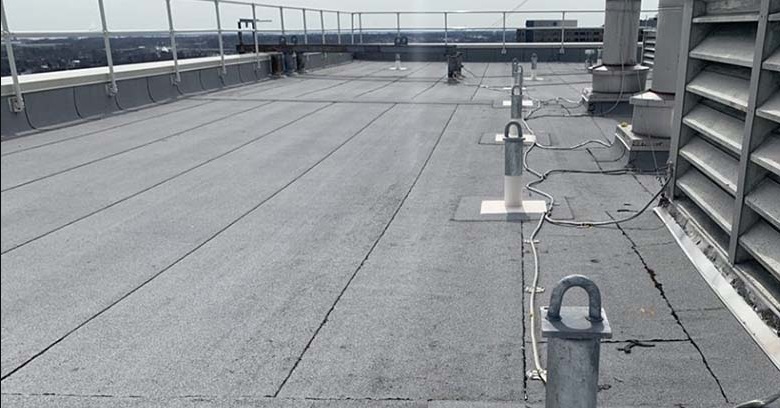
Looking at Flat Roof Coating near Tallahassee Florida?
PRO Roofing explains low-slope roofing in plain terms, one membrane type at a time; the details below are written for owners and managers
To start a conversation about a store, office or warehouse roof, reach out at 850-750-9644 and describe the building
Flat Does Not Mean Level: the Starting Point
Roofs on commercial buildings seem flat from below but are laid with a slight fall toward the drains; water moves slowly across the surface, so every seam has to be fully sealed. Roofers use the word membrane for a continuous waterproof layer applied over insulation and a deck by rolling, welding, gluing or spraying; the three most common types are built-up, rubber and thermoplastic. Managers and owners will say flat, low-slope or membrane as if the three were one idea; the terms overlap, though each points to a different part of the picture. Business people who ask about Commercial Roof Contractors and Commercial Roof Installations usually hope to sort out what each kind of work includes.
Built-Up Roofs, Layer on Layer: What Sits on Top
A built-up roof is made from alternating layers of reinforcing fabric and bitumen, applied one after another; redundancy is the point, since one weak spot is backed by the layers beneath. Most built-up roofs end with stone or a mineral cap sheet that keeps the sun off the asphalt; the sun is the main enemy of asphalt, and the surface layer takes the beating. The weight of the materials and the heat of the process mean trained crews with proper equipment should handle the job; scheduling matters because the materials are applied hot. Owners who ask about Commercial Roof Maintenance and Commercial Roof Replacement usually appreciate a plain account of the layers and the gravel.
Why Rubber Roofing Is So Flexible: How It Goes On
The EPDM sheet is made of synthetic rubber and is rolled out in wide widths, so a large area needs very few seams; the sheet is glued, fastened or held down with ballast stone. Neighboring sheets are joined at their edges by adhesive or tape, and that joint deserves the closest attention; seams are the first place a rubber roof shows age. Black rubber absorbs heat, so the roof surface can run hot in summer, though white versions exist; color is a decision tied to cooling needs and surface temperature. Property teams who compare Commercial Roof Services and Flat Roofs usually want to know how rubber roofs behave in humid summers.
TPO and Heat-Welded Seams: How It Works
Hot air melts the edges of two TPO sheets together, so a thermoplastic seam becomes one continuous piece; a welded joint is as strong as the sheet around it. Most TPO roofs are white or light gray and reflect a large share of sunlight; reflective roofing is popular on buildings that run air conditioning all summer. A good weld depends on clean, dry material and steady temperature settings, which makes careful installation important; the skill of the welder shows in the evenness of the line. Readers who look up Flat Roof Companies and Flat Roof Installation usually want to know who installs and services these membranes.
Restoring Instead of Replacing: What It Can and Cannot Do
The coating goes on as a liquid over a cleaned roof and cures into a waterproof surface with no seams; a coating adds a fresh layer without tearing off what is already there. A coating suits a roof that is structurally sound and not soaked with water; a moisture survey is the usual way to find out. How a coating turns out is decided by preparation: cleaning, repairs and seam treatment all come first; skipping the prep leads to peeling and blisters. Owners who ask about BUR Roofs and Built Up Roofs usually want to learn what a coating can and cannot fix.
Patching Membranes, Seams and Penetrations: Where Leaks Start
Leaks on flat roofs seldom show directly under the hole, because the water moves along the deck and insulation before it drips; locating the source takes a careful look at seams, drains and curbs. The usual repair sites include cracked seams, worn flashing, punctured sheeting and sealant that has failed around pipes and equipment; each problem has a matching repair that suits the membrane type. A roof stays dry longer, and replacement comes later, when small repairs are done on time; keeping water out of the insulation is the main goal of any patch. Readers who type Built Up Roof Installation and EPDM Roofs tend to want repair work separated clearly from replacement.
Edges, Curbs and Drains: Small Parts, Big Duty
The open field of a membrane is usually its strongest part, and trouble begins at the edges and openings; each penetration adds a risk the field does not have. Ponding that stresses every seam is the result when the drains and scuppers meant to carry water off the roof become clogged; standing water adds weight and speeds up wear. Metal edge trim holds the membrane down at the roof edge and sheds water into the gutter; loose trim is the first piece the wind takes in a storm. Managers who look up EPDM Roof Installation and TPO Membrane Roofs usually need a company that can redo flashing without replacing the whole roof.
Keeping the Deck Dry and the Building Efficient: Why It Matters
Rigid insulation boards sit between the deck and the membrane, and they set the building's thermal performance; a tight insulation layer keeps conditioned air indoors. Tapered insulation boards create a slight slope on a level roof and steer water toward the drains; careful layout puts valleys where drains are located. When insulation soaks up water, its value is lost and the moisture sits against the deck for a long time; a small leak can soak a large area unnoticed. Property teams who compare TPO Membrane Roof Contractors and TPO Membrane Roof Services usually look for companies that handle the whole assembly.
Sun, Humidity and the Gulf Coast: What the Region Demands
The surface of a dark or aged membrane climbs well above the air temperature during months of strong sun; coatings and light colors are common tools for managing the heat. Humid coastal air feeds algae and mildew on flat roofs, and standing water makes the growth worse; a damp climate rewards roofs that drain well. Afternoon thunderstorms drop heavy rain in minutes, which tests every drain and seam on the roof; storm season turns small flaws into active leaks. Readers who look up Flat Roof Coating and Flat Roof Coating Services usually hope to find roofers who work on the coast every season.
Hurricane Season and the Low-Slope Roof: Holding It All Together
Wind flowing over a flat roof creates suction that pulls up hardest at the corners and edges; the weak spots are where the sheet is least supported. Ballasted roofs rely on the weight of stone, which can shift in strong gusts if the layer is thin; the right method is specified for the building, not picked at random. Ahead of hurricane season, seams, edges, drains and rooftop equipment deserve a check to head off the worst problems; waiting for the next rain to find the damage is a poor plan. People who look up Flat Roof Repair tend to want clear steps for what happens after the wind passes.
Comparing Materials Side by Side: Putting It Together
The best membrane depends on the use of the building, roof traffic, the existing deck and the cooling system; an honest comparison starts with how the building is used. Asking a roofer to explain why one system beats another for a particular property reveals a good deal; the answer should name the building's own details rather than general praise. Replacement, restoration and repair are three different paths, and each has a place; the right one depends on the condition of the deck and insulation. Readers who look up Flat Roof Services usually want the whole picture in a single conversation.
A Closing Summary: Final Thoughts
Knowing the basics keeps surprises to a minimum when weighing Flat Roof Coating in Tallahassee Florida. For a conversation about a store, office or warehouse roof, call PRO Roofing at 850-750-9644.
Verified

Verified
Verified
Verified
Verified

















