

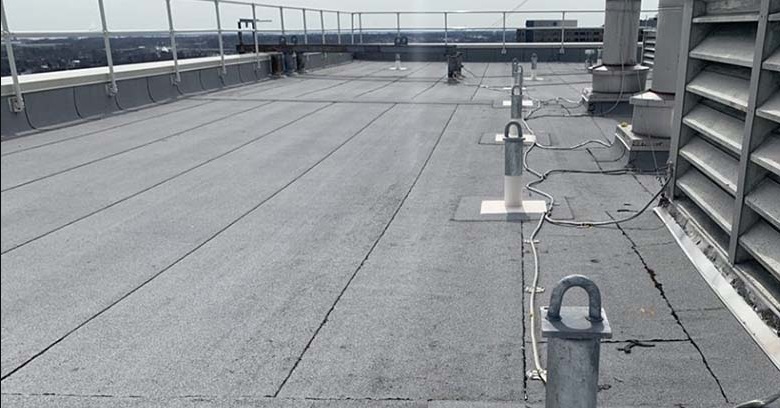
Researching Flat Roofs throughout Monticello Florida?
PRO Roofing walks through how each commercial membrane is built and where it fits; the order below follows the layers from the deck up
To talk a building through with someone who knows these systems, call 850-750-9644 whenever a question comes up
What Makes a Roof Low-Slope: Terms Worth Knowing
Stores, offices and warehouses are mostly capped by a surface that looks level yet carries a slight fall toward the drains; waterproof sheets or coatings do the work that overlapping pieces do on a steep roof. A membrane is one continuous waterproof layer, rolled out, welded, glued or sprayed over a structural deck and its insulation; each type of membrane has its own way of being joined into one unbroken surface. People talking about business roofs mix up flat, low-slope and membrane as though the three words meant one thing; knowing the vocabulary makes conversations with a roofer much shorter. Owners who search for Commercial Roof Contractors and Commercial Roof Installations want to hear how the services fit together before choosing a path.
The Classic Tar and Gravel Roof: Why It Has Lasted
A built-up roof is made from alternating layers of reinforcing fabric and bitumen, applied one after another; the stacked plies work together as one thick waterproof sandwich. A layer of embedded gravel or a granulated cap sheet sits on top to shade the asphalt underneath; a gravel surface also protects the membrane against foot traffic. A system that is heavy and applied hot calls for trained crews and the proper equipment; open flame or kettles are used only by people who know the safety steps. Readers who search for Commercial Roof Maintenance and Commercial Roof Replacement tend to want to hear how many plies make sense for the roof.
EPDM, the Rubber Membrane: the Sheet Method
The EPDM sheet is made of synthetic rubber and is rolled out in wide widths, so a large area needs very few seams; fewer seams mean fewer places for water to find a way in. Where sheets meet, the edges are joined with adhesive or tape, and that joint is the part to watch; seams are the first place a rubber roof shows age. On a summer afternoon, black rubber takes in heat and runs hot, while white versions exist; the dark version remains popular where heating matters more. Owners who search for Commercial Roof Services and Flat Roofs want the installation steps explained before anything is ordered.
Thermoplastic Sheets That Fuse Together: How It Works
Thermoplastic TPO sheets are seamed by melting two edges with hot air into one continuous piece; the weld is the strongest feature of the system. White or light gray is the usual color of a TPO roof, and the surface reflects a large share of sunlight; cooler surfaces also put less stress on the sheet itself. Welds require clean, dry material and steady temperature settings, so careful installation matters; a good crew tests as it works, not after it finishes. Owners who ask about Flat Roof Companies and Flat Roof Installation often want to find crews who specialize in heat-welded sheets.
A New Skin on an Old Roof: What It Can and Cannot Do
Liquid coatings are applied to a cleaned roof and cure into one unbroken waterproof surface; the finish can be white to reflect sunlight. The best candidates for coating are roofs that are structurally sound and not waterlogged; damp material is cut out and replaced before any liquid goes on. Preparation decides the result, because cleaning, repairs and seam treatment all come before any coating is applied; the quality of the surface sets the life of the coat. Readers who type BUR Roofs and Built Up Roofs often want to know which companies handle liquid-applied work.
Fixing Leaks Before They Spread: Working Outward From the Leak
Leaks on flat roofs seldom show directly under the hole, because the water moves along the deck and insulation before it drips; following the evidence uphill is the only reliable method. The usual repair sites include cracked seams, worn flashing, punctured sheeting and sealant that has failed around pipes and equipment; the patch must be made of material compatible with the existing surface. Small repairs done on time keep the roof dry and put off the day a full replacement is needed; regular repair visits take a little attention and save a great deal of trouble. Readers who type Built Up Roof Installation and EPDM Roofs often need to find someone who handles leaks and patches quickly.
Perimeter, Penetrations and Outlets: Weak Points in Any Membrane
The open field of a membrane is usually its strongest part, and trouble begins at the edges and openings; every opening is a place where the continuous skin has to be cut and rejoined. Drains and scuppers carry water off the roof, and clogged outlets cause ponding that stresses every seam; debris, leaves and gravel must be cleared on a schedule. At the roof edge, metal trim pins the membrane down and sheds water into the gutter; the edge is where wind uplift begins. Business people who search for EPDM Roof Installation and TPO Membrane Roofs often want trained people to detail the edges and openings properly.
The Hidden Half of a Commercial Roof: Why It Matters
Boards of rigid insulation are installed beneath the membrane and over the deck, and they determine thermal performance; a tight insulation layer keeps conditioned air indoors. A roof built dead level can be given a slight slope with tapered insulation, which steers water toward the drains; the slope is small but it changes how the roof behaves in every rain. Once insulation gets wet, it loses its value and holds moisture against the deck for a long time; a roof survey can map the wet areas before replacement planning begins. Managers who look up TPO Membrane Roof Contractors and TPO Membrane Roof Services tend to want a full roof system described rather than only the top layer.
Coastal Weather and Flat Surfaces: Reading the Environment
Months of strong sun heat a dark or aged membrane well beyond the air temperature; coatings and light colors are common tools for managing the heat. On flat roofs, humid coastal air encourages algae and mildew, and the growth gets worse where water stands; a damp climate rewards roofs that drain well. Heavy rain from an afternoon thunderstorm arrives within minutes and tests every drain and seam on the roof; overflow scuppers provide a safety path for the extra water. Owners who ask about Flat Roof Coating and Flat Roof Coating Services often want crews who understand how local weather treats flat surfaces.
Holding a Membrane Down in High Wind: Holding It All Together
The corners and edges of a flat roof feel the hardest upward pull from the suction wind creates; a membrane is anchored with fasteners, adhesive or ballast stone, and each method has limits. Stone weight holds a ballasted roof down, and a thin layer of stone can shift in strong gusts; the right method is specified for the building, not picked at random. Before hurricane season, a check of seams, edges, drains and rooftop equipment can head off the worst problems; loose items on a roof become flying debris in high wind. Readers who type Flat Roof Repair tend to want clear steps for what happens after the wind passes.
Choosing Among the Options: a Short Checklist
The right membrane depends on how the building is used, its roof traffic, the existing deck and how the structure is cooled; a warehouse and a restaurant place different demands on a roof. Asking a roofer to explain why one system beats another for a particular property reveals a good deal; vague answers are a sign to keep asking. Replacement, restoration and repair each have a place, and they are three separate paths; the right one depends on the condition of the deck and insulation. Owners who ask about Flat Roof Services want to hear the pros and cons of every system.
Pulling It All Together: a Quick Recap
For Flat Roofs in Monticello Florida, the same ideas apply to every building: a continuous membrane, sealed details and good drainage. PRO Roofing is ready to discuss any low-slope roof, so call 850-750-9644 whenever the time is right.
Verified

Verified
Verified
Verified
Verified

















