

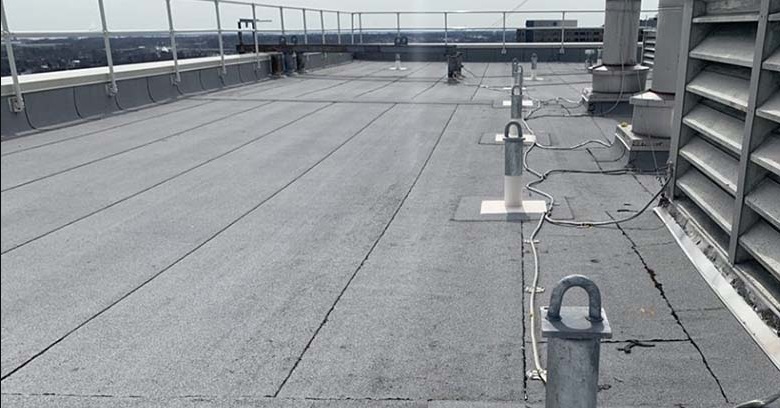
Looking at Flat Roof Coating around Florida Panhandle?
PRO Roofing lays out the flat-roof choices side by side so a building owner can compare them; the notes below start with the basics
To arrange a visit to a commercial property, phone 850-750-9644 and ask whatever comes to mind
The Gentle Pitch of a Commercial Roof: the Big Idea
The top of a shop, office block or warehouse looks flat to the eye, though it carries a slight fall toward the drains; water moves slowly across the surface, so every seam has to be fully sealed. A membrane is one continuous waterproof layer, rolled out, welded, glued or sprayed over a structural deck and its insulation; the material decides how seams are formed and how the roof behaves in the sun. Building owners often use the words flat, low-slope and membrane as though they all meant the same thing; clear terms keep two people from talking about different things. Property teams who compare Commercial Roof Contractors and Commercial Roof Installations want to hear how the services fit together before choosing a path.
Built-Up Roofs, Layer on Layer: How It Goes Together
The built-up method alternates layers of reinforcing fabric with layers of bitumen, laid down in sequence; redundancy is the point, since one weak spot is backed by the layers beneath. The finishing surface is usually gravel or a mineral cap sheet that shields the asphalt from the sun; granules and stone slow the aging that heat would otherwise speed up. The weight and the hot application make this system a job for trained crews working with proper equipment; the procedures are specific, and shortcuts are not an option. Owners who ask about Commercial Roof Maintenance and Commercial Roof Replacement often start by finding out where this layered method is installed.
EPDM at a Glance: Simple and Stretchy
A roof of EPDM rubber needs very few seams, since the sheets come in wide rolls; rubber is known for stretching with the building instead of cracking. At each place where sheets meet, adhesive or tape forms a joint, and that joint is the part to watch; seams are the first place a rubber roof shows age. A black rubber surface soaks up heat and can run hot in summer, though white versions are available; either color is installed the same way. Business people who ask about Commercial Roof Services and Flat Roofs tend to want the process from rolling out the sheet to sealing the edges.
TPO and Heat-Welded Seams: Why Welds Matter
Hot air melts the edges of two TPO sheets together, so a thermoplastic seam becomes one continuous piece; welding is the main reason the material has become common. A large share of the sunlight that hits a TPO roof bounces off, because most are white or light gray; cooler surfaces also put less stress on the sheet itself. A good weld depends on clean, dry material and steady temperature settings, which makes careful installation important; probe checks along the seams reveal any spot that did not fuse. Property teams who compare Flat Roof Companies and Flat Roof Installation often want to find crews who specialize in heat-welded sheets.
Liquid Membranes Applied by Roller or Spray: Prep Makes the Difference
The coating goes on as a liquid over a cleaned roof and cures into a waterproof surface with no seams; a coating adds a fresh layer without tearing off what is already there. Coating performs well only where the roof is structurally sound and is not saturated with water; a moisture survey is the usual way to find out. Before any coating is applied, the roof is cleaned, repaired and treated at the seams, and that preparation sets the outcome; the quality of the surface sets the life of the coat. Owners who ask about BUR Roofs and Built Up Roofs tend to want to hear what the process involves from start to finish.
Repairs on Low-Slope Roofs: a Practical Approach
Since water runs along the deck and insulation before dripping, a flat-roof leak rarely appears below its source; a ceiling stain marks where the water came out, not where it came in. Common repair spots are cracked seams, worn flashing, punctured sheets and failed sealant around pipes and equipment; the right fix keeps the repair from becoming a new weak point. When small repairs are made on time, the roof stays dry and replacement is pushed further out; regular repair visits take a little attention and save a great deal of trouble. Managers who ask about Built Up Roof Installation and EPDM Roofs often need to find someone who handles leaks and patches quickly.
The Details Around the Field of the Roof: What to Inspect
The open field of a membrane is usually the strongest part, and the trouble begins at the edges and openings; every opening is a place where the continuous skin has to be cut and rejoined. Ponding that stresses every seam is the result when the drains and scuppers meant to carry water off the roof become clogged; outlets and gutters deserve a look after every big storm. At the roof edge, metal trim pins the membrane down and sheds water into the gutter; sealant at the joints needs periodic checks. Business people who search for EPDM Roof Installation and TPO Membrane Roofs want a roofer who inspects the drains as well as the surface.
Insulation and Drainage Slope: Beneath the Surface
Thermal performance comes from rigid insulation boards placed between the deck and the membrane; the thickness of the boards is chosen to suit the heating and cooling load. A roof built dead level can be given a slight slope with tapered insulation, which steers water toward the drains; the shaped boards solve ponding without altering the structure. Wet insulation stops doing its job and keeps moisture pressed against the deck for a long time; the only cure is to remove the damp material. Managers who look up TPO Membrane Roof Contractors and TPO Membrane Roof Services often want to know what the work includes below the visible surface.
Heat Loads and Salt Air on a Flat Roof: Reading the Environment
After months of strong sun, a dark or aged membrane runs much hotter than the air around it; ultraviolet light slowly breaks down surface layers. Algae and mildew thrive on flat roofs in humid coastal air, and standing water makes the growth worse; regular cleaning keeps the surface clear and the sheet in good shape. Afternoon thunderstorms drop heavy rain in minutes, which tests every drain and seam on the roof; overflow scuppers provide a safety path for the extra water. Business people who type Flat Roof Coating and Flat Roof Coating Services often want crews who understand how local weather treats flat surfaces.
Preparing a Flat Roof for Storm Weather: Edges First
The corners and edges of a flat roof feel the hardest upward pull from the suction wind creates; the roof edge is where storm damage tends to start. Strong gusts can shift a thin layer of stone, and a ballasted roof relies on that stone weight; mechanically attached sheets depend on how many fasteners hold each strip. Checking seams, edges, drains and rooftop equipment ahead of hurricane season can prevent the worst problems; a quick walk after a storm finds hidden lifted edges. Property teams who compare Flat Roof Repair often want a crew available when storm damage must be assessed fast.
Which System Suits Which Roof: Factors That Count
The right membrane depends on the building's use, its roof traffic, the existing deck and how the structure is cooled; a warehouse and a restaurant place different demands on a roof. Asking a roofer to explain why one system beats another for a particular property reveals a good deal; the answer should name the building's own details rather than general praise. Repair, restoration and replacement are separate paths, and every one has a place; the aim is to spend effort where the roof needs it. Property teams who compare Flat Roof Services often want a roofer to explain choices without pushing one material.
Pulling It All Together: the Short Version
Whoever is reading up on Flat Roof Coating in Florida Panhandle will find the conversation with a roofer simpler after reading this page. To talk about a specific building, call PRO Roofing at 850-750-9644.

















