

Comparing options for Commercial Roof Installations near Florida Panhandle?
PRO Roofing explains low-slope roofing in plain terms, one membrane type at a time; the sections below take each material in turn
To start a conversation about a store, office or warehouse roof, reach out at 850-750-9644 and ask whatever comes to mind
What Makes a Roof Low-Slope: the Starting Point
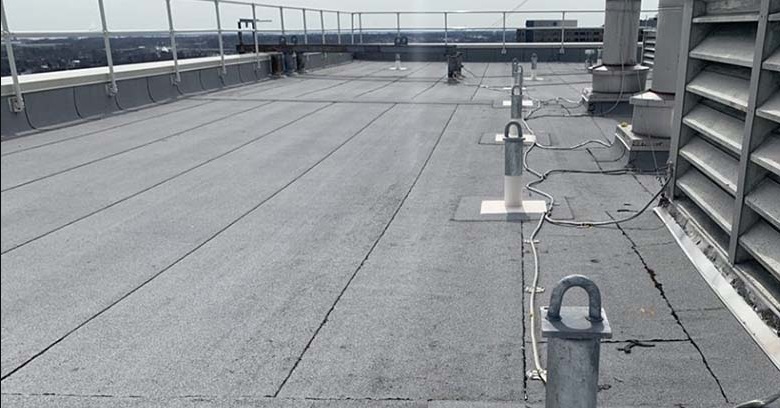
Most stores, offices and warehouses are topped by a surface that looks flat but carries a slight fall toward the drains; the covering must hold back water that lingers rather than sheds quickly. The membrane is a single waterproof skin that is rolled, welded, glued or sprayed across insulation and a structural deck; the three most common types are built-up, rubber and thermoplastic. Building owners often use the words flat, low-slope and membrane as though they all meant the same thing; the terms overlap, though each points to a different part of the picture. Managers who type Commercial Roof Contractors and Commercial Roof Installations usually want to find a crew experienced with large low-slope roofs.
Built-Up Roofs, Layer on Layer: Why It Has Lasted
Plies of reinforcing fabric are set between mopped coats of bitumen, and the stack makes a built-up roof; redundancy is the point, since one weak spot is backed by the layers beneath. A layer of embedded gravel or a granulated cap sheet sits on top to shade the asphalt underneath; the sun is the main enemy of asphalt, and the surface layer takes the beating. Because of the weight and the hot application, this system is work for trained crews with proper equipment; the roof deck must be able to carry the extra load. People who look up Commercial Roof Maintenance and Commercial Roof Replacement often start by finding out where this layered method is installed.
EPDM at a Glance: the Sheet Method
A roof of EPDM rubber needs very few seams, since the sheets come in wide rolls; the sheet is glued, fastened or held down with ballast stone. At each place where sheets meet, adhesive or tape forms a joint, and that joint is the part to watch; careful cleaning before the joint is made decides how long the joint holds. Black rubber absorbs heat, so the surface can run hot in summer, although white versions are made; a lighter surface reflects more sun and can cut the load on air conditioning. Readers who type Commercial Roof Services and Flat Roofs want the installation steps explained before anything is ordered.
TPO and Heat-Welded Seams: Joints That Become One Piece
TPO is a thermoplastic sheet whose seams are joined with hot air, which melts two edges into one continuous piece; welding is the main reason the material has become common. The typical TPO roof is white or pale gray, reflecting a large share of the sun's light; the surface stays cooler than a dark membrane in the afternoon. Clean, dry sheets and steady temperature settings are what a weld requires, so installation has to be careful; weather and surface dirt both change how the weld takes. Readers who look up Flat Roof Companies and Flat Roof Installation often want to find crews who specialize in heat-welded sheets.
Liquid Membranes Applied by Roller or Spray: What It Can and Cannot Do
Over a cleaned roof, a liquid is applied that cures into a unbroken waterproof surface; coverage is measured by thickness rather than by the number of sheets. Roofs that are sound in structure and clear of saturated insulation are the ones coatings suit best; wet insulation under the surface has to be dealt with first. Preparation decides the result, because cleaning, repairs and seam treatment all come before any coating is applied; skipping the prep leads to peeling and blisters. Managers who look up BUR Roofs and Built Up Roofs often want to know which companies handle liquid-applied work.
Fixing Leaks Before They Spread: Working Outward From the Leak
Leaks on flat roofs seldom show directly under the hole, because the water moves along the deck and insulation before it drips; following the evidence uphill is the only reliable method. Common repair spots are cracked seams, worn flashing, punctured sheets and failed sealant around pipes and equipment; the patch must be made of material compatible with the existing surface. When small repairs are made on time, the roof stays dry and replacement is pushed further out; keeping water out of the insulation is the main goal of any patch. People who look up Built Up Roof Installation and EPDM Roofs often need to find someone who handles leaks and patches quickly.
Perimeter, Penetrations and Outlets: Weak Points in Any Membrane
Edges and openings are where trouble begins, while the open field is the membrane's strongest part; a perimeter that is detailed well keeps wind and water out. Drains and scuppers carry water off the roof, and clogged outlets cause ponding that stresses every seam; debris, leaves and gravel must be cleared on a schedule. Metal edge trim holds the membrane down at the roof edge and sheds water into the gutter; corroded metal near the coast should be replaced early. Property teams who compare EPDM Roof Installation and TPO Membrane Roofs usually need a company that can redo flashing without replacing the whole roof.
Tapered Boards That Move Water: Why It Matters
Boards of rigid insulation are installed beneath the membrane and over the deck, and they determine thermal performance; the boards also create a flat, firm base for the sheet. Tapered insulation boards create a slight slope on a level roof and steer water toward the drains; a plan shows where each wedge goes. A soaked layer of insulation no longer insulates, and it holds moisture against the deck for a long time; a roof survey can map the wet areas before replacement planning begins. Managers who look up TPO Membrane Roof Contractors and TPO Membrane Roof Services want a straightforward answer on how replacement is staged.
Sun, Humidity and the Gulf Coast: What the Region Demands
Months of strong sun heat a dark or aged membrane well beyond the air temperature; ultraviolet light slowly breaks down surface layers. Algae and mildew thrive on flat roofs in humid coastal air, and standing water makes the growth worse; salt in the air also attacks metal edges and fasteners. Afternoon thunderstorms drop heavy rain in minutes, which tests every drain and seam on the roof; a roof that drains well handles sudden downpours without ponding. Business people who type Flat Roof Coating and Flat Roof Coating Services often want crews who understand how local weather treats flat surfaces.
Hurricane Season and the Low-Slope Roof: Holding It All Together
Wind flowing over a flat roof creates suction, and it pulls up hardest at the corners and edges; the roof edge is where storm damage tends to start. Ballasted roofs rely on the weight of stone, which can shift in strong gusts if the layer is thin; each method suits a different building and wind exposure. The worst problems can be headed off by inspecting seams, edges, drains and rooftop equipment before hurricane season; loose items on a roof become flying debris in high wind. Property teams who compare Flat Roof Repair tend to want clear steps for what happens after the wind passes.
A Decision Framework for Owners: Factors That Count
The right membrane depends on how the building is used, its roof traffic, the existing deck and how the structure is cooled; the answer comes from matching conditions to the material. Much can be learned by asking a roofer why one system suits a particular property better than another; vague answers are a sign to keep asking. Replacement, restoration and repair are three different paths, and each has a place; a survey sorts the roof into sections that need each approach. Owners who ask about Flat Roof Services usually want the whole picture in a single conversation.
What to Remember About Commercial Roofs: Final Thoughts
Someone planning Commercial Roof Installations in Florida Panhandle can ask sharper questions once the materials have names. PRO Roofing is ready to discuss any low-slope roof, so call 850-750-9644 whenever the time is right.

















