Looking for Metal Roofer Services across Tallahassee Florida?
PRO Roofing explains what happens on a metal roofing job from the tape measure to the final seam; the sections below follow the job in order
To talk about a metal roof on your own property, call 850-750-9644 when ready
What Sets Metal Roofing Apart as a Trade: an Introduction
Metal roofing is a trade within a trade, and it calls for skills that shingle crews do not use every day; panels are long, rigid and unforgiving of small errors. Each panel is a long, visible line on the roof, and every flaw can be seen from the ground; a slight angle at the start grows into a visible gap at the end. A homeowner or manager can learn a lot by asking how the crew handles layout, seaming and trim; specific details are a sign of real experience. People who ask about Metal Roofer Contractors usually look for contractors who can describe their method in plain words.
From Tape Measure to Order Sheet: Square, Straight and True
Accurate measurements are the foundation of a good metal roof; a small error multiplies across many panels. Because few buildings are exactly square, the layout accounts for small differences; panels are matched to the building, not forced to the plan. The crew turns its notes into a cut list that the shop or the roll former follows; leftover pieces are saved for small details. Homeowners who search for Metal Roofer Services tend to want a clear description of the layout stage.
A Machine That Makes Roofing: the Roll Former
Coil stock is fed through a series of rollers that bend the metal into the profile, and a shear cuts it to size; adjustments can be made quickly if a measurement changes. Neither site forming nor shop forming is better in every case, and each has practical advantages; the crew's equipment and experience play a part. Protection of the finish begins when the panel leaves the machine or the truck; touch-up paint is kept on hand for small marks.
Bending Metal at the Edges: Small Pieces, Big Importance
Skilled crews fold flashing and trim from flat sheets using a brake, producing the exact shape needed; matching color is part of the plan. A metal roof is only as good as the details where it meets everything else; each piece laps the one below so that water runs over it. The design of the details accounts for movement as a matter of routine; the crew follows the maker's pattern for each part.
Setting Standing Seam Panels: the Raised Seam in Practice
Standing seam panels are held to the deck by hidden clips that slide, and the neighboring panel snaps or folds over the top; a measuring check every few panels keeps the lines straight. Mechanical seaming uses a machine that walks along the panel, folding the edge as it goes; a seaming tool is set for the thickness of the metal. Because the pieces are continuous, the roof has few places where water could enter; the pan between the seams is where water travels. People who type Standing Seam Metal Roofers tend to want specifics on how the seams are closed.
Overlaps, Screws and Washers: Fastener Placement
Each sheet is laid with an overlap at the side and at the end, then secured with screws and washers; the overlap is set to shed water correctly. Fasteners must be driven to the right depth, which a careful installer judges by feel and by sight; periodic checks of the fasteners keep the roof tight. A taut string line at the start prevents trouble at the end; consistent spacing gives a regular, pleasing pattern. People who type Corrugated Metal Roofers tend to want to see how the screws and washers are handled.
Stamped Metal Pieces in Place: Interlocks and Overlaps
Each metal shingle locks into its neighbors along the edges, forming a pattern much like a traditional roof; each piece is lighter and easier to handle than a full-length panel. Straight courses give the roof its crisp look, and a slight drift is visible at a glance; the final courses are adjusted slightly to meet the ridge. The result is a roof with the look of a classic covering and the durability of metal, installed by crews who know the product; the surface sheds water quickly. People who type Metal Shingle Roofers usually look for specialists who handle stamped panels with care.
Handling Heat and Glare: Grip on Slippery Roofs
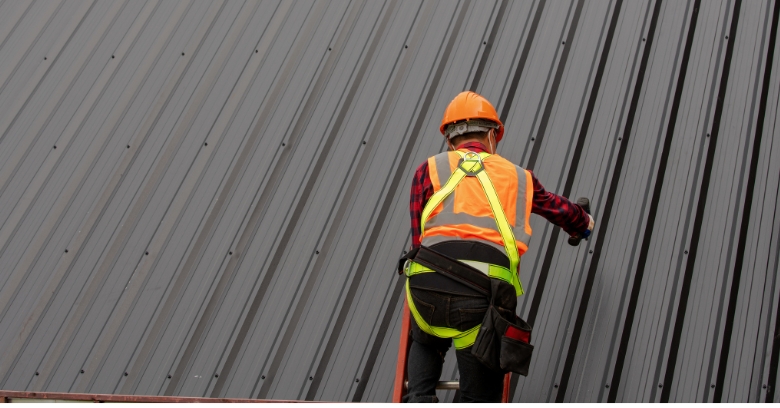
Safe movement on metal begins with the right boots and a steady rhythm; wet surfaces call for a pause in the work. Heat and brightness are part of a metal roofer's day, so schedules are adjusted to the temperature; delicate tasks are scheduled for the cooler morning. Cut edges are keen, so crews wear protective gear and deburr or hem exposed ends; scraps are collected and removed throughout the day.
Cutting Into the Roof the Right Way: the Critical Details
Each opening in a metal roof gets its own custom seal, since no single piece fits every situation; the crew marks the position of each opening before cutting. The upslope side of an opening is flashed first, so that water running down the roof flows around it; a mistake in the order leaves a gap. The metal lasts a long time, but the seals around openings do not, and they need periodic inspection; fresh sealant at the right spots stops a slow leak.
Metal Roofers in Storm Season: Once the Storm Passes
The strength of a metal roof in a storm comes from the details of its attachment; the crew follows the pattern set by the manufacturer. Inspection after a storm focuses on edges, ridges, penetrations and any place where debris landed; dents are noted and judged for effect on water flow. Quick temporary measures protect the house until proper parts can be installed; follow-up checks confirm that the repair is holding.
What to Ask Before Choosing a Crew: Getting Specific
Ask the crew to describe a typical day and a typical problem, and notice how specific the answers are; specific answers show familiarity with the product. A thoughtful roofer will explain the tradeoffs among standing seam, corrugated and shingle-style metal; no decision has to be made on the spot. A good crew treats the property respectfully, cleans up each day and communicates clearly; the crew explains what will happen each day.
Why Cleanup Matters More With Steel: Protecting the Finish
On a metal roof, a clean surface is a matter of protection and not only of looks; a damp cloth wipes off dust and fingerprints. A final pass with touch-up paint closes small gaps in the finish; marks on the trim are treated as carefully as marks on the panels. A final conversation about care sets up the roof for a long and dependable life; a brief note describes what to watch for after storms.
A Closing Note: Next Steps
Someone looking into Metal Roofer Services in Tallahassee Florida can ask sharper questions once the stages of the work have names. Call PRO Roofing at 850-750-9644 and describe the project, and the next steps will be explained in plain words.
Verified

Verified
Verified
Verified