Researching Standing Seam Metal Roofers in Chattahoochee Florida?
PRO Roofing shows the workmanship behind a metal roof, one stage at a time; the notes below are written in plain words
To set up a visit, reach out at 850-750-9644
Tools and Habits of the Trade: the Starting Point
Crews that work with metal learn methods of measuring, cutting and seaming that differ from other roofing work; measurements must be exact because panels cannot be stretched to fit. Metal does not forgive shortcuts, since a panel that is cut wrong or fastened badly is hard to hide; seams, laps and trim are checked against the plan. A short list of workmanship questions goes a long way; a crew proud of its work is happy to explain. People who ask about Metal Roofer Contractors usually start by comparing how each contractor approaches the work.
From Tape Measure to Order Sheet: Why Accuracy Matters
A metal roof begins with a tape measure and a sketch of each plane, with every length and angle recorded; panels are usually cut to order at the shop or on site. Roofs are rarely perfectly square, so a good crew checks the lines of the building and adjusts the layout; extra length is ordered to allow for adjustments. The crew turns its notes into a cut list that the shop or the roll former follows; panels are labeled for the slope they belong to. Homeowners who search for Metal Roofer Services usually look for firms that explain how panels are planned and ordered.
A Machine That Makes Roofing: How It Works
A roll former is a machine that shapes flat coil metal into panels with ribs or seams, cut to the exact length needed; the finish is protected as the metal passes through. Pre-made panels are delivered on a truck, bundled and protected for handling; long panels need good handling on the way up. Metal must be lifted, carried and set down gently, with the painted surface protected from scuffs; loose tools are kept off the surface.
Bending Metal at the Edges: Craft at the Edges
Every metal roof needs trim at the eaves, rakes, ridges and walls, and much of it is bent to fit on the job; each piece is cut and bent to suit its location. A metal roof is only as good as the details where it meets everything else; precise cutting is more reliable than heavy caulking. Fasteners are placed so that the metal can slide a little as it warms and cools; rigid fastening in the wrong place can cause waves or noise.
Where Standing Seam Work Gets Precise: How the Seam Closes
On a standing seam roof, each panel is attached with clips, and the raised edge of the next panel covers them; a measuring check every few panels keeps the lines straight. Closing the seam is the signature step, and it is done with a tool that rolls along the joint and crimps it tight; a crew checks the closure by sight and by touch. The design relies on the panel itself rather than on overlaps and caulk; the ridge and eave details carry most of the complexity. Managers who look up Standing Seam Metal Roofers often want standing seam metal roofers who can handle clips, seams and long panels.
Overlaps, Screws and Washers: Fastener Placement
The ribbed sheets overlap at their edges, and screws pass through the high or low points of the waves; a straight row of screws looks neat and works well. The washer should be compressed just enough to seal without splitting; periodic checks of the fasteners keep the roof tight. A taut string line at the start prevents trouble at the end; consistent spacing gives a regular, pleasing pattern. Homeowners who ask about Corrugated Metal Roofers usually appreciate a plain account of how ribbed sheets go on.
Small Panels, Big Detail: What the Work Involves
Metal shingles are small interlocking panels, stamped to imitate slate, shake or tile, and installed course by course; each piece is lighter and easier to handle than a full-length panel. Rows are measured carefully, since a small error in the first courses carries through the entire roof; the pattern is staggered to create the intended look. Metal shingles bring the appearance of tile or slate with less weight on the structure; the surface sheds water quickly. Visitors who compare Metal Shingle Roofers tend to want a crew that can match the look of tile or slate.
Slick Surfaces and Hot Days: Working Smart
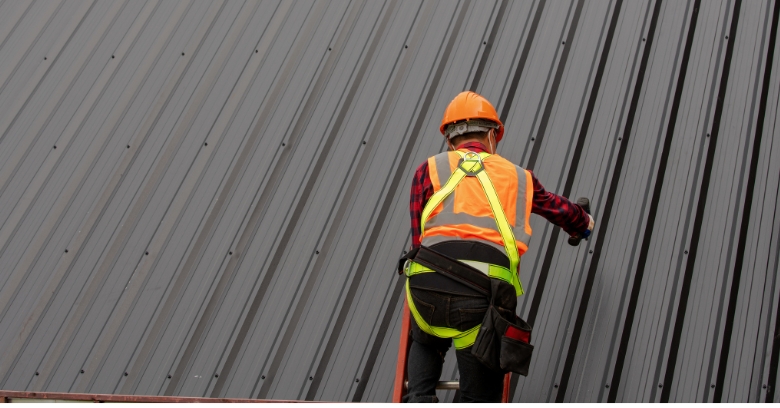
The surface of a metal roof can be as slick as wet glass when dew or rain is present, and crews adjust their pace; ladders are secured and extended above the edge. Crews plan around the hottest hours of the day to keep the work accurate and safe; the team keeps an eye on one another. Metal can cut, and good habits prevent injuries; the work area is kept tidy.
Cutting Into the Roof the Right Way: Boots, Curbs and Collars
Any pipe, vent, skylight or chimney that passes through a metal roof needs a carefully made flashing; the crew marks the position of each opening before cutting. The principle is simple: water runs downhill and must be guided around every obstacle; a mistake in the order leaves a gap. Over time, sealants and rubber collars wear out, so these details are the first to deserve attention in a maintenance check; checking after a big storm is wise.
Holding Panels Down in High Wind: Where Metal Roofs Are Tested
High wind pulls hardest at the edges and ridge, so metal roofers add fasteners and use heavier trim in those zones; a well-attached panel resists lifting. Metal roofs often survive storms well, but the small parts need checking; dents are noted and judged for effect on water flow. Repairs on metal are usually targeted, since individual panels, trim pieces or fasteners can be replaced without redoing the roof; a tarp covers any opening that appears.
Listening for Real Experience: the First Conversation
Ask how panels are measured, how trim is made and how fasteners are chosen; a crew proud of its craft will gladly explain. The right panel style depends on the slope, the look the owner wants and the exposure of the property; a clear recommendation comes with reasons. The way a crew treats the yard says a lot about how it treats the roof; magnets sweep up screws and cut ends.
Cleanup and Finishing Touches on Metal: Care at the Finish
A careful crew treats shavings like debris with a deadline, because rust spots appear quickly in humid air; a magnet picks up screws and cut ends from the yard. Small scratches and nicks in the paint are touched up with matching coating before the job is closed out; the cut ends of panels are sealed against moisture. The job ends with a look at the finished roof from the ground and, when appropriate, from the roof itself; the finished surface should look straight and clean from the street.
Putting It All Together: Next Steps
Someone looking into Standing Seam Metal Roofers in Chattahoochee Florida can ask sharper questions once the stages of the work have names. For a conversation about metal panels, seams and trim, call PRO Roofing at 850-750-9644.
Verified

Verified
Verified
Verified