Researching Metal Roofer Services around Chattahoochee Florida?
PRO Roofing explains what happens on a metal roofing job from the tape measure to the final seam; each stage of the work gets its own section
To talk about a metal roof on your own property, call 850-750-9644 and describe the building
The Craft Side of the Roof: the Starting Point
Putting metal on a roof is a distinct craft that rewards practice and precision; a crooked panel shows from the street. Metal does not forgive shortcuts, since a panel that is cut wrong or fastened badly is hard to hide; a slight angle at the start grows into a visible gap at the end. Understanding the crew's method makes it easier to judge the quality of a proposal; a vague response calls for another question. People who ask about Metal Roofer Contractors usually look for contractors who can describe their method in plain words.
Measuring the Roof and Ordering the Panels: How It Is Done
Accurate measurements are the foundation of a good metal roof; panels are usually cut to order at the shop or on site. A clean look on the finished roof depends on dealing with out-of-square walls and edges; trim hides minor variation along the edges. A tidy list of panels and trim pieces keeps the job organized and the waste low; delivery is timed to match the work schedule. Owners who ask about Metal Roofer Services usually appreciate a crew that treats the survey as part of the work.
Long Panels Without Joints: Making Metal at the Job Site
Panels can be formed on the property, so the length can be matched to the roof; the crew checks each panel as it comes out. Other crews order panels from a shop, where the equipment is permanent and the conditions are controlled; the roof size and shape help decide the best path. Protection of the finish begins when the panel leaves the machine or the truck; touch-up paint is kept on hand for small marks.
Bending Metal at the Edges: the Detail Work
Skilled crews fold flashing and trim from flat sheets using a brake, producing the exact shape needed; each piece is cut and bent to suit its location. Skylights and curbs are surrounded with metal pieces shaped to fit tightly and shed water; each piece laps the one below so that water runs over it. The design of the details accounts for movement as a matter of routine; the roof stays tight as the temperature changes.
Where Standing Seam Work Gets Precise: Clip by Clip
Standing seam panels are held to the deck by hidden clips that slide, and the neighboring panel snaps or folds over the top; a hand seamer or a powered tool closes the joint. Snap-lock panels press together by hand, while double-lock panels are folded over with a tool; a wavy seam indicates a problem with the setup. The design relies on the panel itself rather than on overlaps and caulk; the pan between the seams is where water travels. Managers who look up Standing Seam Metal Roofers usually look for crews that specialize in this concealed-fastener system.
Installing Corrugated Panels: Lap by Lap
Each sheet is laid with an overlap at the side and at the end, then secured with screws and washers; the pattern is repeated sheet after sheet. Correct screw tension is the single most important skill with exposed-fastener panels; a drill with a clutch helps set the right depth. Starting square is the secret to a clean corrugated roof; panels are adjusted gradually if the building is out of square. Managers who look up Corrugated Metal Roofers usually appreciate a plain account of how ribbed sheets go on.
Small Panels, Big Detail: What the Work Involves
The pieces are stamped and coated, then fastened row by row from the eave upward; the pace is deliberate and unhurried. Straight courses give the roof its crisp look, and a slight drift is visible at a glance; patience is the main tool. Many homeowners choose this style to match the character of a house while gaining a lighter-weight roof; the coating is designed to hold its color in strong sun. Visitors who compare Metal Shingle Roofers want to find installers who know small-panel metal systems.
Staying Upright on a Painted Panel: Caution Pays
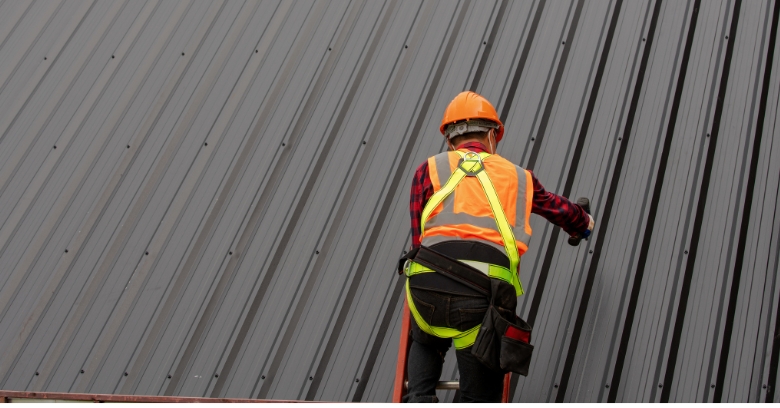
Metal panels offer little traction when damp, so roofers choose footwear with good grip and take it slow; harnesses and anchors are used on steeper slopes. Heat and brightness are part of a metal roofer's day, so schedules are adjusted to the temperature; water and shade breaks are built into the day. Sharp edges are another hazard, which is why gloves, sleeves and careful handling are part of every metal job; the foreman checks that everyone is wearing the right gear.
Penetrations in a Metal Roof: Flashings for Openings
Pipes and vents are sealed with boots, collars or curbs designed for metal roofs; sealant is used where metal meets metal. Water has to be directed around each penetration, which is why the order of installation matters; the crew checks the work with a hose when needed. Maintenance on a metal roof is mostly about small seals and fasteners; checking after a big storm is wise.
Metal Roofers in Storm Season: Fasteners Under Stress
Along the Gulf, the way panels are anchored matters as much as the material itself; a well-attached panel resists lifting. Even a roof that looks fine from the ground deserves a closer look after a strong blow; scattered debris is cleared from valleys and gutters. Quick temporary measures protect the house until proper parts can be installed; small repairs after a storm keep minor problems from growing.
Questions That Show the Quality of the Work: the First Conversation
A good first question is how the crew handles layout and seams, because the answer reveals experience; specific answers show familiarity with the product. A thoughtful roofer will explain the tradeoffs among standing seam, corrugated and shingle-style metal; the roofer should relate each option to the house. Courtesy, cleanliness and communication matter nearly as much as technical skill; magnets sweep up screws and cut ends.
The Last Hour on a Metal Job: the Final Walk
On a metal roof, a clean surface is a matter of protection and not only of looks; gutters are checked for stray metal pieces. Small scratches and nicks in the paint are touched up with matching coating before the job is closed out; the cut ends of panels are sealed against moisture. The job ends with a look at the finished roof from the ground and, when appropriate, from the roof itself; the finished surface should look straight and clean from the street.
Where to Go From Here: Next Steps
For Metal Roofer Services in Chattahoochee Florida, the main points are careful layout, clean details and secure fastening. To have a crew look at the building and explain the options, call PRO Roofing at 850-750-9644.
Verified

Verified
Verified
Verified