Storm season in the Big Bend rarely ends with an obvious verdict. It ends with questions. Many Tallahassee, Florida, homeowners walk the yard after a squall line, see no shingles in the grass, and decide the roof is fine. Six weeks later, a brown ring shows up on a hallway ceiling. By then, the decking has been damp for a while, the insulation is matted, and what a roofing contractor could have fixed in an afternoon has become a sizable repair.
That gap between the storm and the symptom is the real problem. Most damage in Leon County doesn't come from a direct eyewall hit. It comes from straight-line winds, afternoon downbursts in the 50 to 60 mph range, and limbs dropping out of a mature live oak and loblolly pine canopy. Those forces back-nail out, crease shingle tabs, tear drip edge, and split pipe boots. None of that is visible from the driveway, and all of it lets water in. Florida law also sets a clock on wind and hurricane claims, so waiting for proof of a leak can cost more than the repair.
This article covers seven signs that warrant a professional look after storm season, what each one usually indicates, and the first steps to take to document, insure, and permit before booking roofing services.
Why Post-Storm Damage Hides So Well Here
North Florida roofing fails quietly. A shingle lifted and reset by wind looks normal from below, but the sealant strip is broken, and the tab will lift again with the next gust. A nail that has backed out a quarter inch tents the shingle above it and creates a pinhole path to the deck. Neither shows up until rain arrives with wind behind it.
Tree cover makes it worse. Heavily wooded neighborhoods like Bradfordville, Florida, along with Midway and Woodville, collect pine straw in valleys and behind chimneys, where the mats hold moisture against the shingles year-round. A roofing contractor can spot those trouble spots in minutes, while a ground-level look finds almost nothing. Storms like Hermine, Michael, Idalia, Debby, and Helene left this pattern behind: scattered, hidden, fastener-level damage across thousands of homes that looked untouched.
Seven Signs You Need a Roofing Contractor
1. Creased, Lifted, or Displaced Shingles
Wind damage usually presents as a horizontal crease across a tab, not a bald spot on the roof. Once a shingle folds, the fiberglass mat fractures, and that tab will shed granules and leak long before its neighbors do. A missing ridge cap is another giveaway, since caps sit at the roof's highest-pressure point and go first.
2. Granules in Gutters and on Splash Blocks
A handful of granules after a new installation is normal. Piles of them at downspout outlets and on splash blocks after a storm are not. Granules are the UV shield for the asphalt underneath, and bare asphalt ages fast under Florida sun. Heavy granule loss on the storm-facing slope usually signals small hail, which is most likely in early spring, or abrasive debris blown across the field.
3. Cracked Pipe Boots and Tired Flashing
The most common leak source on a shingle roof is a cracked neoprene pipe boot, which typically starts to fail around the eight- to twelve-year mark. Wind and heat finish them off. A Tallahassee homeowner who sees a stain directly below a plumbing vent is usually looking at a boot, not a roof-wide failure, and any competent roofing contractor can confirm that in one trip. Step flashing at walls and chimney counter-flashing deserve the same scrutiny.
4. Punctures and Bruising From Limb Strikes
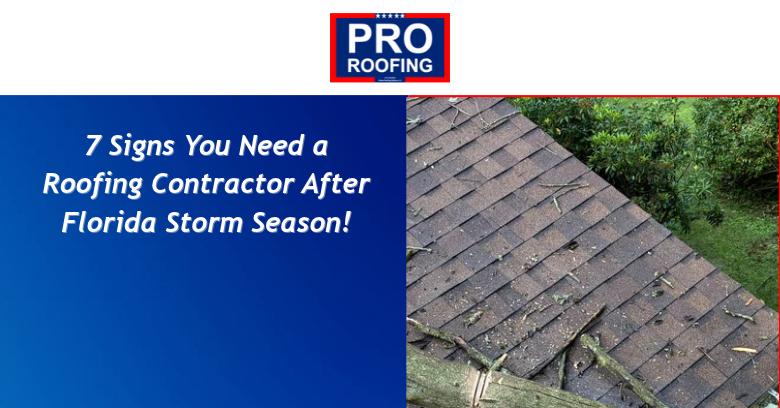
A falling limb can drive straight through a shingle and into the deck without breaking a single branch visibly on the roof. Smaller strikes leave soft, bruised spots that feel spongy underfoot. On the wooded lots around Bradfordville, this is the most common reason a roofing contractor recommends partial deck replacement, which is typically billed per sheet of CDX plywood rather than by the square. Limbs can also crush gutters and loosen downspouts, backing water up under the drip edge.
5. Ceiling Stains That Appear Days or Weeks Later
Interior stains lag the storm. Decking and insulation absorb water first, and the ceiling only discolors once the material is saturated. That delay is why a clean ceiling the morning after a storm proves nothing. A stain that grows after each rain, musty smells in a closet, or bubbling paint on a window header all point to active intrusion.
6. Backed-Out Nails, Torn Drip Edge, and Loose Gutters
Uplift works on the edges of a roof hardest. Torn or bent drip edge, exposed nail heads along the rakes, and gutters pulling away from fascia are all evidence the roof took real wind load. In the Tallahassee, Florida, area, where rainfall runs roughly 59 to 65 inches a year, undersized gutters compound the problem; 6-inch K-style gutters with 3x4 downspouts handle that volume far better than 5-inch with 2x3, and .032 aluminum coil resists limb strikes better than .027. A roofing contractor should check the edge metal and the gutter system together, because they fail as a pair.
7. An Older Roof That Just Took a Beating
Age changes the math. In the Panhandle, 3-tab shingles generally last 15 to 20 years, architectural shingles 20 to 25, TPO and modified bitumen 20 to 25, and standing seam or 5V metal 30 to 50. A 19-year-old architectural roof with creased tabs and granule loss is a different conversation from a 7-year-old roof with one bad boot. Insurers can't refuse coverage based on roof age alone when a roof is under 15 years old, but older roofs often need an inspection showing five or more years of remaining life.
What to Do in the First Two Weeks
Document Before Anyone Climbs Up
Photograph the roof, the yard debris, the gutters, and every interior stain with time stamps. Then work through the basics in order:
- Make only safe, temporary repairs, such as a tarp over an open puncture, and keep the receipts.
- Schedule a professional inspection. PRO Roofing offers a free roof assessment that gives homeowners a written scope and estimate before they commit to anything.
- Compare the inspection findings against the deductible before deciding whether to file.
- Get the permit question answered early, since re-roofs require one.
Demand surges after every named storm. Dumpster, crane, and material lead times stretch, shingle color availability narrows, and adjuster inspections commonly run one to three weeks out. Booking a Bradfordville, Florida, inspection in the first days after a system moves through puts a homeowner ahead of that queue.
Insurance, Deductibles, and the Rules That Apply
Florida gives property owners one year from the date of loss to file a hurricane or windstorm claim, and 18 months for a supplemental claim. Hurricane deductibles usually run 2 percent of dwelling coverage, sometimes up to 5 percent, so on a $350,000 dwelling limit the first $7,000 is the owner's. That is why many smaller repairs are better paid out of pocket. Two rules matter when comparing bids: a contractor may not offer to waive or absorb a deductible, and Assignment of Benefits is barred on residential property policies issued since 2023. Any roofing company that leads with a deductible-waiver pitch is offering something Florida law prohibits.
Permits and Code in Leon County
Re-roofs require a permit through City of Tallahassee Growth Management or Leon County Development Support and Environmental Management, plus an in-progress dry-in inspection. Permit issuance typically takes a few days to about two weeks. Jobs over $2,500 need a Notice of Commencement under the Construction Lien Law. Leon County is not a High-Velocity Hurricane Zone, so the Miami-Dade and Broward product rules don't apply here; since the 2022 change to the 25 percent rule, a roof built to the 2007 code or later only needs the damaged portion brought up to current code. A roofing contractor familiar with both the city and county processes around Bradfordville can tell a homeowner which jurisdiction they fall under before the paperwork starts.
Final Thoughts
Storm damage in the Tallahassee, Florida, area is generally minor and often goes unnoticed at first. Problems like creased tabs, loose nails, cracked boots, and bruised decking may not cause leaks immediately. Instead, these issues often lead to leaks during the next storm, after the claims period has started and repair needs have increased. A trained professional can spot these potential problems quickly.
Homeowners don't have to rely on guesswork. PRO Roofing is licensed and insured and serves North Florida and South Georgia. They offer a free roof assessment along with a written estimate. It's wise to have a roofing contractor inspect your roof after the season's last storm. Keep the photos and report for your records so that you can make informed insurance decisions based on accurate information. Schedule your roofing services now, before the next round of storms exposes any weak spots!
Key Takeaways
- Most wind damage in the Big Bend shows up as creased shingles, lost ridge cap, backed-out nails, and torn drip edge, not as obvious missing shingles.
- Cracked neoprene pipe boots are the most common leak source and typically start failing around eight to twelve years of age.
- Ceiling stains often appear days or weeks after a storm, so a dry ceiling the next morning does not mean the roof is sound.
- Florida allows one year from the date of loss to file a hurricane or windstorm claim and 18 months for a supplemental claim.
- No contractor in Florida may offer to waive or absorb an insurance deductible, so treat that pitch as a warning sign.
- Re-roofs in Leon County require a permit and an in-progress dry-in inspection, and jobs over $2,500 require a Notice of Commencement.
Frequently Asked Questions
Is My Roof Repairable, or Does the Whole Thing Have to Go?
That depends on how widespread the damage is and how old the roof is. Isolated issues like one bad pipe boot, a few creased tabs, or a single limb puncture are usually repairs. Widespread granule loss, failed fasteners across multiple slopes, or a roof near the end of its service life generally points to a re-roof.
Should I File a Claim or Pay Out of Pocket?
First, compare the repair estimate to the deductible. Hurricane deductibles are commonly 2 percent of dwelling coverage, which can exceed the cost of a boot replacement or a small shingle repair. If the estimate is well below the deductible, paying out of pocket is often the better choice.
How Long Does a Shingle Re-Roof Take?
Tear-off and installation on a typical home usually take one to three days. Permitting adds a few days to about two weeks beforehand, and after a named storm, material and dumpster lead times can further delay the schedule.
What Does a Re-Roof Cost in This Area?
Regionally, architectural shingle re-roofs commonly run about $4.50 to $8.00 per square foot installed, with 3-tab lower and standing seam metal considerably higher. A typical 1,800 to 2,400-square-foot home often lands somewhere between $11,000 and $25,000, depending on pitch, stories, layers to remove, and decking replacement.
Do I Need a Wind Mitigation Inspection?
It is not required, but it often lowers premiums. The state form documents roof-deck attachment, nail pattern, secondary water barrier, and roof-to-wall connectors, and it stays valid for five years.