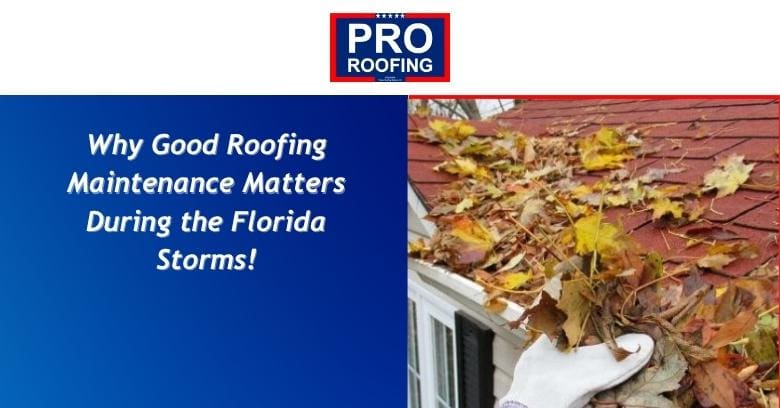
Hurricane season does not announce itself politely in North Florida. A roof that looked fine in April can be stripped, punctured, or quietly leaking by October, and the homeowners who end up with drywall damage, attic mold, and a denied claim are rarely the ones who suffered a direct hit. They are the ones whose pipe boots cracked two years ago and whose last real roofer inspection happened when the house changed hands. A seasoned roofing contractor will say the same thing every summer: most storm damage starts with something small that nobody looked at.
That matters more now than it did a decade ago. Since Hurricane Michael in 2018, the Big Bend has absorbed Idalia in 2023, Debby and Helene in 2024, and three EF-2 tornadoes that crossed Tallahassee, Florida, on May 10, 2024. Insurance rules have tightened, claim deadlines have shortened, and code requirements at replacement have grown teeth. Homeowners who wait for a leak are negotiating from the weakest possible position, which is exactly why roofing contractors across the region push maintenance into the late winter and spring calendar.
This article covers what actually fails on Tallahassee and Midway, Florida, roofs; what a real maintenance visit includes; how the 25% rule and permitting affect repair decisions; what replacement typically costs; and how wind mitigation paperwork and insurance deadlines fit into the picture.
The Storm Math Behind a North Florida Roof
Tallahassee averages roughly 60 to 65 inches of rain a year, much of it arriving in short, violent summer bursts rather than gentle all-day soaking. The ultimate design wind speed around the capital region sits near 120 mph for standard residential construction, with coastal Wakulla and Taylor counties rated higher. Hurricane season runs June 1 through November 30, and the peak stretch from mid-August through mid-October is when small defects become claims.
What Actually Fails First
Shingles usually outlast the surrounding components. Roofing contractors in this market see the same short list of failure points year after year:
- Neoprene pipe boots, which typically crack somewhere around eight to twelve years — long before an architectural shingle is worn out.
- Valleys holding pine needle mats that dam water and hold moisture against the underlayment.
- Loose or missing drip edge at eaves and rakes, which lets wind-driven rain get behind the fascia.
- Sealant at chimneys, skylights, and vent flashing that has gone chalky and pulled away.
- Backed-up gutters that push water under the starter course.
Architectural shingles are rated for 20 to 30 years but realistically deliver 18 to 25 under North Florida UV, while 3-tab often gives 12 to 18. Flat and low-slope commercial systems such as modified bitumen, TPO, or EPDM generally run 15 to 25 years. None of those numbers hold if you neglect penetrations.
Wind, Debris, and the Canopy Problem
Hail is not the main concern in this area. The beautiful live oak and pine canopy in neighborhoods around Tallahassee and Midway, Florida, often drops branches onto ridge caps, erodes granules from slopes, and clogs gutters with needle litter every fall. Gloeocapsa magma algae streaking is commonly found on north-facing slopes; while it’s mainly cosmetic in the short term, it’s a good reason to consider algae-resistant shingles with copper granules when replacement is needed. Homeowners in Perry, Madison, and Monticello are currently dealing with repair backlogs following storms Idalia and Helene, making scheduling just as important as the scope of the work.
Maintenance Before June 1: The Window That Matters
The best maintenance window in this region is late winter through May. Crews are not chasing emergency tarps, materials are available, and a permitted repair can be completed before the first named storm forms. A roofing contractor working a spring schedule can also spot decking issues while the attic is dry enough to read stains accurately.
What a Real Maintenance Visit Includes
A meaningful inspection is not a walk around the driveway with binoculars. It should cover:
- Replacement or resealing of aged pipe boots and flashing collars.
- Fresh sealant at all penetrations, including satellite mounts and abandoned vents.
- Ridge cap and hip inspection for lifted or wind-cupped shingles.
- Valley clearing and removal of pine needle and leaf debris.
- A fastener check for backed-out nails, loose flashing, and popped ridge vent screws.
- Gutter and downspout flow testing, plus a look at fascia rot.
- An attic check for daylight, staining, or damp insulation.
Homeowners around Midway, Florida who live under heavy canopy should expect two debris clearings a year rather than one. For rental or seasonal property, a documented inspection record becomes useful evidence if an insurer later questions whether damage was sudden or long-neglected.
Documentation Is Part of Maintenance
Dated photographs of a sound roof are worth real money after a storm. Insurers increasingly argue that damage predates the event, so a roofing contractor’s report carries weight. A homeowner searching “roofer near me” online at midnight with water coming through a ceiling has no baseline to point to; a homeowner with a spring inspection report does.
Repair or Replace: The Rules That Decide
Florida code does more than suggest. Under the Florida Building Code Existing Building 25% rule, if more than a quarter of a roof section is repaired or replaced within a 12-month period, that entire section generally must be brought up to current code — unless the roof was built to the 2007 Florida Building Code or later, per the 2022 SB 4-D changes. A roofing contractor should explain which side of that line a proposed repair falls on before work starts, not after.
Permits and Inspections in Leon County
Re-roofs require a permit through City of Tallahassee Growth Management or Leon County DSEM depending on the address, and the sequence typically includes a dry-in or nailing inspection followed by a final inspection. The roofing contractor pulls the permit; a crew that asks the homeowner to pull it is a warning sign. Repairs above a minor scope generally need a permit as well.
Replacement also triggers upgrades that repairs do not: deck re-nailing with 8d ring-shank fasteners roughly six inches on center at edges and field, a secondary water barrier or sealed deck in wind-borne-debris areas, code-required drip edge at eaves and rakes under FBC-R R905.2.8.5, and a six-nail pattern for Florida wind ratings. Only one existing layer may be roofed over, and most Panhandle jurisdictions and manufacturers still push full tear-off.
What Replacement Typically Costs
Trade-wide, asphalt shingle replacement generally runs $4.50 to $9.00 per square foot installed, putting a 2,000-square-foot roof commonly between $12,000 and $28,000 nationally. Steep pitch, a second layer, rotten decking, and skylights all move that upward. Deck replacement typically adds roughly $70 to $130 per 4x8 sheet of 15/32” CDX. Minor repairs often land between $400 and $1,500, and emergency tarping between $300 and $1,200. Seamless aluminum gutters run roughly $8 to $18 per linear foot installed, with .032 gauge 6” K-style and 3x4 downspouts costing more than .027 with 5” and 2x3 — an upgrade worth considering under a pine canopy. A local roofing contractor should break these out line by line rather than quoting one lump number.
Insurance, Wind Mitigation, and Deadlines
Florida law prohibits contractors from paying or rebating a homeowner’s insurance deductible under FS 489.147, so any roofing contractor offering to “cover the deductible” is proposing something illegal. Since SB 2-A in 2022, hurricane claims must be filed within one year of landfall, with 18 months for supplemental claims. Those clocks run fast when adjusters are backlogged.
Insurers may inspect a roof at 15 years, though SB 4-D limits refusal to renew if the roof has at least five years of remaining useful life. The wind mitigation inspection form OIR-B1-1802 is valid for five years, with premium credits tied to roof cover, deck attachment, roof-to-wall connections, secondary water resistance, and roof geometry. After a code-compliant replacement, that form often determines whether you pay for a new roof or partially recover the cost through premium credits. My Safe Florida Home grants can help as well, though funding opens and closes in cycles.
Choosing the Right Help
Typing “roofer near me” into a phone produces a long list, and after a storm that list fills with out-of-town crews. Tallahassee area homeowners need to verify that the company is properly licensed and carries both general liability and workers’ compensation insurance. They should also ensure the company handles its own permits and can provide references for recent local projects. Roofing contractors who cannot answer a straightforward question about the 25% rule or the dry-in inspection aren’t the right fit for a Florida roof.
Local knowledge is practical, not sentimental. A crew that works in Tallahassee, Florida, and the surrounding counties understands needle loads, canopy strikes, and which neighborhoods still carry 2007-era decking. PRO Roofing, operating as Parker Roofing Options, LLC out of Tallahassee, serves residential and commercial clients across North Florida and into South Georgia with hand-selected crews and full insurance coverage, holds an A rating with the Better Business Bureau, and offers a free roof assessment so homeowners can see the condition and the estimate before committing. For a homeowner in Tallahassee or Midway, Florida weighing repair versus replacement, that pre-commitment look is the cheapest information available. Searching “roofer near me” is a reasonable starting point, but the decision should rest on licensing, permits, and documented work —not ad placement.
Wrapping Up
Storms in Florida that affect the Tallahassee area typically don’t cause roof failures; they reveal existing issues. Problems such as cracked boots, clogged valleys, loose flashing, and missing drip edges remain unnoticed during dry months. However, when a hurricane strikes, these vulnerabilities provide entry points for water. By the time moisture reaches the ceiling, homeowners may find themselves overwhelmed with building code requirements, permit timelines, and a one-year deadline for filing insurance claims all at the same time.
The fix is unglamorous and inexpensive: a roofing contractor inspection in late winter or spring, a documented maintenance visit, and a clear-eyed conversation about whether the roof has five good years left or five bad ones. Scheduling that assessment before the end of May costs far less than emergency tarping in October, and it produces the paperwork that protects a claim later. Homeowners who act during the quiet season keep control of the timeline, budget, and crew choice. Start planning today: arrange an inspection and required maintenance during the upcoming winter season to beat the roofing rush before storm season and stay protected in the future!
Key Takeaways
- Pipe boots typically crack around eight to twelve years and are a leading source of leaks long before shingles wear out.
- The best maintenance window in North Florida runs from late winter through May, ahead of the June 1 start of hurricane season.
- If more than 25% of a roof section requires repair within 12 months, current code applies to the whole section unless the roof was built to the 2007 FBC or later.
- Hurricane claims must be filed within one year of landfall, with 18 months allowed for supplemental claims.
- A completed OIR-B1-1802 wind mitigation form is valid for five years and can reduce premiums after a compliant replacement.
- Florida law prohibits any contractor from paying or rebating a homeowner’s insurance deductible.
Frequently Asked Questions
Will insurance pay if my roof is old?
Possibly, though insurers may inspect at 15 years and adjust coverage accordingly. Under SB 4-D, a carrier generally cannot refuse renewal solely on age if the roof has at least five years of useful life remaining.
Can the roof just be repaired, or does the 25% rule force replacement?
It depends on how much of the roof section is affected and when it was built. Exceeding 25% within 12 months triggers full code compliance for that section, unless the roof was constructed to the 2007 Florida Building Code or later.
Do I need a permit for a repair?
Generally yes, for anything beyond a very minor scope. Reroofs in Leon County require a permit through the City of Tallahassee or Leon County DSEM, with a dry-in or nailing inspection and a final inspection.
Does emergency tarping hurt my insurance claim?
No, tarping protects the claim by preventing further damage, which policies typically require. Photograph the damage before and after the tarp goes on, and keep the invoice for the adjuster.
Will a new roof lower my homeowners premium?
Often yes, through wind mitigation credits rather than the replacement itself. Request an OIR-B1-1802 inspection after the work passes final, since credits hinge on deck attachment, roof cover, straps, secondary water resistance, and geometry.
How long do shingles actually last around Tallahassee?
Architectural shingles typically deliver 18 to