
Storm season in North Florida is very real. Between Hermine’s direct hit on the capital in 2016, Michael in 2018, Idalia in 2023, and both Debby and Helene tracking near Perry in 2024, the region has spent most of the past decade cleaning up after wind and water. Roofs take the first hit, and the ones that fail rarely fail because the shingles were cheap. They fail because a starter strip was skipped on the rake, because the roofing deck was still held down with 1980s smooth-shank nails, or because a soffit panel blew out and pressurized the attic from below.
The uncomfortable truth is that most homeowners only think about their roof after the tarps go up. By then, every qualified roofing contractor within an hour of Tallahassee, Florida is booked, materials are tight, and out-of-area crews are knocking on doors with clipboards. The window to do this calmly is April and May, before the June 1 start of hurricane season and long before the mid-August through early October peak.
This article walks through what actually matters for storm readiness in Tallahassee and Midway, Florida, Leon County, and throughout the surrounding counties: the wind speeds the code is built around, the Florida statutes that decide whether a repair becomes a replacement, the specific fastening and flashing details that separate a roof that holds from one that peels, and how to evaluate a roofing contractor before you need one in a hurry.
What North Florida Storms Actually Do to a Roof
Wind is Local, and So Are the Specs
Leon County’s ultimate design wind speed under ASCE 7 sits around 120 mph for a typical Risk Category II home. Drive south toward Crawfordville or southeast toward Perry, and that number climbs; Pensacola reaches roughly 150 mph. The same roofing company can build two very different assemblies a county apart, because fastening schedules, uplift resistance, and edge detailing scale with that design speed. Homeowners in Midway, Florida, and Quincy sit in a similar band to Tallahassee, but the assumption that “a roof is a roof” is exactly how underbuilt edges end up flying.
Nobody should promise a hurricane-proof roof. A competent roofing contractor can deliver a wind-rated, code-compliant system with documented product approvals.
Water Volume is the Other Half of the Problem
Tallahassee averages roughly 59 to 65 inches of rain a year, and single-day tropical totals of six to ten inches are routine, not exceptional. Add the live oak, laurel oak, and pine canopy that makes this area beautiful, and valleys pack with pine straw, gutters clog mid-storm, and water backs up under shingle courses. Limb strikes do as much damage here as uplift. Black streaking from Gloeocapsa magma is endemic too, which is why roofing contractors here specify algae-resistant shingles or zinc and copper strips.
The Code Rules That Decide Repair Versus Replacement
The 25% Rule
Florida Statute §553.844, as amended in 2022, is the provision most homeowners collide with. If more than 25% of a roof is repaired or replaced within a 12-month period, the entire roofing system must be brought into compliance with current code. There is an exception: roofs built to the 2007 Florida Building Code or later that are being replaced to current standards. Practically, this means a storm that damages a third of your slope can convert a patch job into a full reroof, and a homeowner should hear that from a roofing contractor before signing anything, not after the tear-off starts.
Sealed Decks, Re-Nailing, and Six Nails
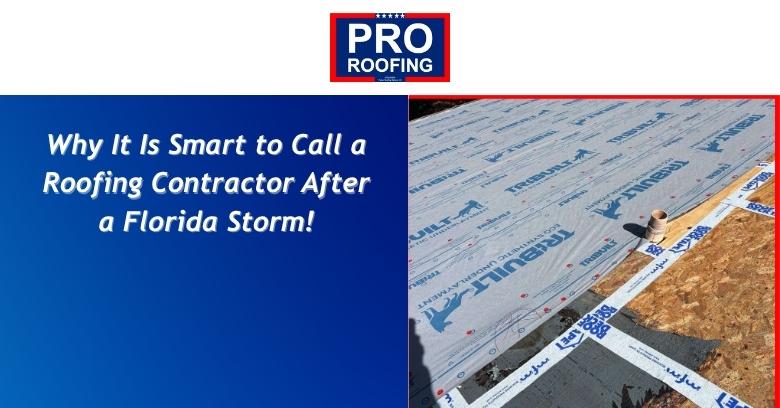
The 2023 Florida Building Code, 8th Edition, requires a sealed roof deck on most reroofs. That means taped deck seams or a self-adhered underlayment such as Polyglass or Grace, not a single layer of felt. Reroof re-nailing calls for 8d ring-shank nails, typically at 6 inches on center at edges and in the field, driven into rafters or trusses. On pre-1994 homes, the original 6d smooth-shank sheathing nails are a known failure point, and a roofing contractor pulling them out often delivers the single biggest improvement in the project.
Shingles themselves must be installed with six nails rather than four, with starter strip on the eaves and the rakes. Rake starter is the most frequently skipped wind detail in the industry. When homeowners around Midway, Florida ask why one house lost shingles and the neighbor’s held, the answer is usually found on the gable edge.
A Pre-Season Preparation Checklist
Work through this in April or May, before the queue fills:
- Book a free roof assessment. Reputable roofing companies typically provide one, so you get a documented look at the deck, flashing, and fasteners before any commitment.
- Trim the canopy back. Remove limbs overhanging the roof plane and clear pine straw from valleys, behind chimneys, and around skylights.
- Clear and test the gutters. Run a hose. Water should leave the downspout, not sheet over the front edge.
- Inspect soffits from the ground and the attic. Vented vinyl soffit blowing out is a top Panhandle failure mode; once wind pressurizes the attic, it lifts the deck from below.
- Photograph everything. Date-stamped photos of a sound roof are the cheapest insurance documentation you can get.
- Check your policy. Confirm your hurricane deductible, your Coverage A limit, and whether you have a separate wind endorsement.
- Pull the paperwork on the last reroof. Permit records tell a roofing contractor what code cycle the assembly was built to.
Materials and Details Worth Paying For
Shingles, Metal, and Wind Ratings
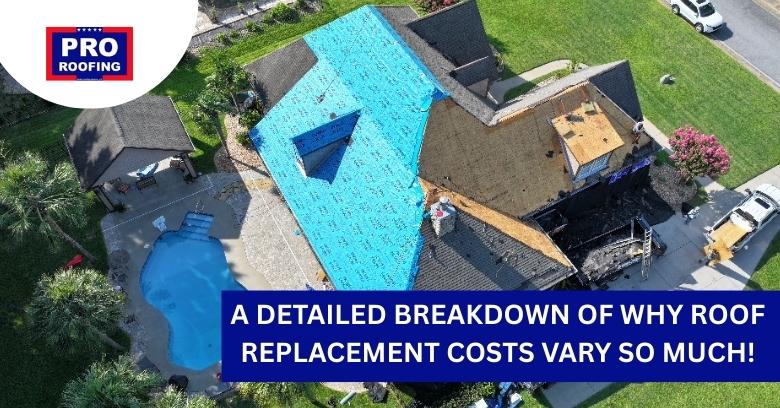
Architectural shingles in this climate typically last 18 to 25 years, shorter under heavy tree canopy. Look for ASTM D3161 Class F (rated to 110 mph) or ASTM D7158 Class H (rated to 150 mph) on products such as GAF Timberline HDZ, Owens Corning Duration, or CertainTeed Landmark. Standing seam metal generally outperforms shingles on uplift and sheds debris better, though the installed cost is higher and the panel clip system has to be engineered for the local design speed. A North Florida asphalt shingle reroof typically runs somewhere around $5.50 to $9.00 per square foot installed, which on a 2,200 square foot home lands roughly in the $14,000 to $30,000 range depending on pitch, layers, and how much decking needs replacing. Plywood or OSB sheets usually add $75 to $150 each.
The Small Parts That Fail First
Drip edge with a 2-inch deck flange, properly lapped, keeps wind-driven rain from wicking under the starter course. H2.5A hurricane clips and gable-end bracing are structural work, often handled alongside the roof but sometimes by a separate trade; a roofing contractor should tell you plainly which scope is theirs. Ridge vents perform better than off-ridge vents in high wind when installed to spec. Seamless 5-inch or 6-inch aluminum gutter runs roughly $8 to $16 per linear foot, and the choice between .027 and .032 gauge, or 2x3 versus 3x4 downspouts, matters when eight inches of rain arrives in a day. Plan on one downspout per 30 to 40 feet of run.
Insurance, Permits, and Paperwork
Wind Mitigation Credits
A wind mitigation inspection documented on form OIR-B1-1802 records roof covering, deck attachment, roof-to-wall connections, roof geometry, and secondary water barrier. Those credits frequently reduce premiums, and the secondary water barrier credit is one reason a sealed deck pays for itself twice. Under SB 76 from 2021, an insurer generally cannot refuse to renew solely because a roof is over 15 years old if an inspection shows at least five years of remaining life.
Hurricane deductibles are usually 2% of Coverage A, meaning $6,000 out of pocket on a $300,000 dwelling. Note that §489.147 makes it illegal for a contractor to offer to pay or waive that deductible; anyone offering is telling you something about how they operate. Claim deadlines also tightened in 2022: one year for new or reopened claims, and 18 months for supplemental.
Permits and Licensing
Permits go through City of Tallahassee Growth Management or Leon County DSEM depending on jurisdiction, and a Notice of Commencement is required on work over $2,500 under §713.13. Homeowners in Midway, Florida, Quincy, and Monticello file with their own county offices. Most small repairs still require a permit, and a licensed roofing company will pull it rather than ask the owner to.
Choosing a Contractor Before You Need One
After every named storm, out-of-area crews flood the region. Verify any state license at MyFloridaLicense.com, confirm liability and workers’ compensation coverage in writing, and check the company’s standing with the Better Business Bureau. PRO Roofing, based in Tallahassee, Florida, holds an A rating with the BBB and carries both liability and workers’ compensation coverage, which protects the homeowner as much as the crew.
Local matters for practical reasons. A local roofing contractor knows Leon County’s fastening requirements, keeps tarping capacity nearby, and stays reachable in six months when a flashing detail needs attention. Serving Tallahassee, as well as Bradfordville, Woodville, Crawfordville, Midway, Quincy, Monticello, and Perry means the crew is an hour away, not a state away. Ask any roofing contractor for their license number, proof of insurance, the product approval numbers for the shingle and underlayment, and a written scope that names the fastener pattern.
The Bottom Line
Storm preparation in North Florida isn’t about buying the most expensive roofing shingles; it is about the deck underneath, the nails holding it down, the sealed underlayment above, and the edge details the wind finds first. Homeowners who schedule an assessment in spring get their choice of materials, a realistic timeline, and time to handle insurance paperwork before the season peaks. Those who wait until a storm is named compete with every other household in the region for the same crews and trucks.
The next step is straightforward: have a qualified, professional roofing contractor evaluate the roof, document the condition in writing, and decide with real numbers whether this is a repair year or a replacement year. Doing that during the off-season costs a morning; doing it after a storm costs considerably more.
Key Takeaways
- Schedule a roof assessment in April or May, because contractor availability collapses once hurricane season peaks in late August.
- Repairing or replacing more than 25% of a roof in a 12-month period triggers full current-code compliance under Florida law, with a limited exception for post-2007 assemblies.
- Current code requires a sealed roof deck on most reroofs, and shingles must be installed with six nails plus a starter strip on both eaves and rakes.
- A wind mitigation inspection on form OIR-B1-1802 can document credits that reduce insurance premiums, especially the secondary water barrier credit.
- Verify any contractor’s state license at MyFloridaLicense.com and confirm liability and workers’ compensation coverage before work begins.
- New or reopened storm claims must be filed within one year, and supplemental claims within 18 months.
Frequently Asked Questions
Can my roof be repaired, or does the 25% rule force a full replacement?
It depends on how much of the roof area is affected within a 12-month period. If damage and repair exceed 25% of the roof, Florida Statute §553.844 requires the whole system to meet current code, unless the roof was built to the 2007 Florida Building Code or later.
Will my insurer drop me because my roof is over 15 years old?
Not automatically. Under SB 76, passed in 2021, an insurer generally cannot refuse renewal solely due to roof age if an inspection shows at least five years of remaining useful life.
Do I need a permit for a small repair?
Usually yes, and the contractor should pull it. Permits go through City of Tallahassee Growth Management or Leon County DSEM, and jobs over $2,500 also require a Notice of Commencement.
Does a wind mitigation inspection actually lower my premium?
In most cases, it does, sometimes significantly. The OIR-B1-1802 form documents deck attachment, roof-to-wall connections, roof geometry, and secondary water barrier, each of which can carry a separate credit.
Metal or architectural shingle for wind resistance?
Standing seam metal generally handles uplift and debris better, but a properly installed Class H shingle system rated to 150 mph performs well in Leon County. The right choice depends on budget, roof geometry, and how much tree canopy surrounds the house.
How fast can a crew tarp after a storm?
Response times depend on storm severity and how many homes are affected, but a locally based company can typically reach properties faster than out-of-area crews. Emergency tarping is triage, not a repair, and should be followed by a full assessment.
Are hurricane straps part of the roofing scope?
Sometimes, but not always. H2.5A clips and gable-end bracing are structural connections, and while they are often addressed during a reroof, the written scope should state clearly who is performing that work.
How much does a reroof typically cost in this area?
North Florida asphalt shingle reroofs generally run about $5.50 to $9.00 per square foot installed. On a 2,200-square-foot home, that lands roughly between $14,000 and $30,000, with pitch, layer removal, and decking replacement driving the variation.