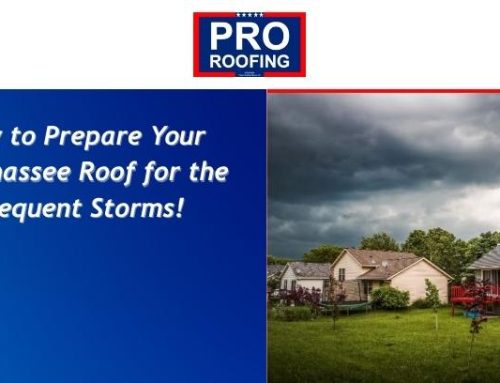
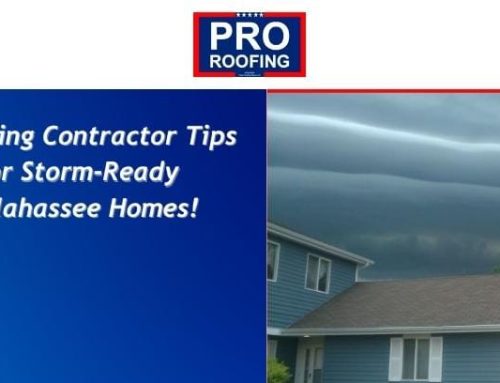
Storm season in North Florida rarely announces itself politely. A line of afternoon thunderstorms can drop 50 to 60 mph downbursts over Killearn Estates in fifteen minutes; a tropical system can spend a full day pushing rain sideways under drip edge; and a spring squall line can throw hail across Midtown before anyone thinks to look up. By the time the sky clears, most homeowners in Tallahassee, Florida, have no idea whether their roof took a hit or simply got wet. That uncertainty is the expensive part, because water that enters a punctured deck does its worst work quietly, in insulation and ceiling joists, weeks before a stain appears.
When it comes to calling a local roofer, timing matters more than it used to. Florida law now allows property owners only one year to file an insurance claim for damage after a loss; insurers are stricter about older shingle roofs, and out-of-state crews tend to arrive within days of any named storm. A homeowner who waits for a ceiling stain may be past the window that a careful roofing contractor could have used to document fresh, storm-related damage. Acting early protects both the building and the claim.
This article walks through what a professional inspection actually covers after a storm affecting Tallahassee, or Bradfordville, Florida: what to check from the ground and the attic, how adjusters separate storm damage from age, which state rules and permits apply in Leon County, what the work typically costs, and how to tell a licensed local roofing contractor from a storm chaser working a neighborhood with a clipboard.
The First 72 Hours: Look Early, Stay Off the Roof
The single most useful thing a Tallahassee area homeowner can do after a storm is document conditions while the evidence is fresh, without climbing anything. Wet shingles, loose limbs, and damaged decking make a post-storm roof one of the most dangerous surfaces on a property. Inspections should, therefore, be performed by roofing contractors with fall protection, ladder training, and insurance.
Ground-Level Evidence Anyone Can Gather
A walk around the perimeter with a phone camera produces most of what an adjuster and a roofing contractor will want to see:
- Granules collecting in gutters, downspouts, and splash blocks, which indicates the shingle surface has been scoured or impacted.
- Creased shingle tabs, a horizontal fold line that means wind lifted the tab and dropped it back down.
- Lifted or bent drip edge along eaves and rakes, often the first metal to move in a downburst.
- Displaced or missing ridge cap shingles, the most exposed component on the whole roof.
- Dents in soft metals such as turbine vents, gutter aprons, and vent caps, which is how hail leaves a fingerprint.
- Limb strikes and scattered pine debris, common under the live oaks and loblolly pines along Miccosukee, Centerville, and Old Bainbridge roads.
The Attic Check After the Next Rain
Inside the house, the attic tells a more honest story than the exterior. After the next rainfall, a flashlight inspection should look for damp or darkened decking, pinpoints of daylight at nail holes, and stained insulation near valleys, chimney flashing, and plumbing penetrations. Homeowners around Bradfordville, Florida, with tall pines close to the structure often find small puncture leaks that never show from the driveway. Photographs with dates attached help enormously when a roofing contractor and an adjuster compare notes later.
Storm Damage Versus Ordinary Wear
Adjusters deny claims for one reason more than any other: the damage reads as deterioration rather than a single weather event. Understanding the difference before filing saves time and frustration.
What Usually Reads as Storm Damage
Fresh mechanical damage looks fresh. Creased tabs, torn shingles with clean fiberglass exposed, punctures from limb strikes, uniformly dented soft metal, and displaced ridge caps all point to a discrete event. So does damage concentrated on one slope, typically the one facing the storm’s strongest winds.
What Usually Reads as Wear
Cracked neoprene pipe boots are the classic example. That rubber collar commonly fails somewhere between eight and twelve years, and the resulting leak gets blamed on the last hurricane far more often than it deserves. Curled shingle edges, widespread granule loss with no impact pattern, rusted fasteners, and sagging valleys signal age and ultraviolet exposure. Architectural shingles sold with 25- to 30-year ratings often deliver 15 to 22 years in Panhandle heat, so a roof approaching that range may simply be finished. An honest roofing contractor will say so rather than push a claim that will not survive review. This also matters for coverage, since many insurers now decline shingle roofs at 15 years or older unless an inspection documents at least five years of remaining service life.
Florida Rules That Shape the Repair
Leon County is not in the High Velocity Hurricane Zone, which applies only to Miami-Dade and Broward. Local work falls under inland requirements, with an ultimate design wind speed generally in the 120 to 139 mph band under ASCE 7. That still drives real product and fastening standards.
Permits, the 25 Percent Rule, and Fastening
Every reroof requires a permit, pulled through the City of Tallahassee or Leon County Development Support and Environmental Management, depending on the address; neighboring jobs run through Gadsden, Wakulla, Jefferson, Madison, or Taylor county offices. Under SB 4-D, if 25 percent or more of a roof section is repaired or replaced, that entire section must be brought to current code, unless the roof was built to the 2007 Florida Building Code or later and passes inspection. Qualifying reroofs also require a secondary water barrier. Shingles must be installed with six nails each, and decking is typically re-nailed with 8d ring-shank fasteners at six inches on center. On any job over $2,500, a Notice of Commencement is recorded under Florida Statute 713.13. A licensed roofing contractor handles all of this as routine paperwork, and homeowners in Bradfordville, Florida should expect to see permit numbers and Florida Product Approval numbers on the proposal for shingles and accessories.
Insurance: Deadlines, Deductibles, and Credits
Florida Statute 627.70132 requires property claims to be filed within one year of the date of loss, with supplemental claims allowed out to 18 months. Older articles still cite two years; that changed in 2022. Missing the deadline ends the conversation, no matter how legitimate the damage is.
Homeowners should also know what a hurricane deductible actually costs. It is usually a percentage of dwelling coverage rather than a flat figure, commonly two percent, which on a $400,000 dwelling means $8,000 out of pocket before any payment. That math often determines whether filing makes sense at all for minor damage. Florida Statute 489.147 makes it illegal for a contractor to pay, waive, or rebate that deductible, so any offer to do so is a disqualifying red flag.
A wind mitigation inspection, typically $75 to $150, documents features like nailing pattern, roof shape, and secondary water barrier, and the resulting credits can reduce premiums by roughly 15 to 45 percent. Scheduling one after a reroof is one of the easiest returns for a homeowner, and a good roofing contractor will document the completed work so the inspector can verify it.
Hiring Right: Licensed Local Crews Versus Storm Chasers
After Hermine in 2016, Michael in 2018, the May 2024 tornado outbreak that tore through Killearn, Midtown, and Frenchtown, and the Helene and Debby seasons that battered Taylor County, unfamiliar trucks appeared in local driveways within days. Some were legitimate. Many were not.
Anyone typing “roofer near me” into a phone at 9 p.m. after a storm should apply a short screening process before signing anything:
- Verify the license. Florida roofing work requires a DBPR-certified or registered roofing license with a CCC or RC prefix, searchable at MyFloridaLicense by name or number.
- Confirm insurance. Ask for a certificate showing both general liability and workers’ compensation, sent directly from the agent.
- Check the physical address. A local roofing contractor has a Tallahassee, Florida office, not a motel and a magnetic door sign.
- Read the contract for deductible language. Any promise to cover or absorb it violates state law.
- Inquire about who is pulling the permit. If the answer is "the homeowner," it's best to walk away and look elsewhere.
- Ask whether the crew can meet the adjuster on site. Contractors who attend the inspection resolve scope disputes far more efficiently.
Searching “roofer near me” is a reasonable starting point, but the results deserve the same scrutiny as any other contract. Residents in Bradfordville, Florida, Ox Bottom, Betton Hills, Myers Park, Indianhead, and Southwood tend to get better outcomes from firms that will still answer the phone in three years. PRO Roofing, operating as Parker Roofing Options, LLC out of Tallahassee, Florida, is licensed and insured with liability and workers’ compensation coverage, holds an A rating with the Better Business Bureau, and offers a free roof assessment so homeowners can see the condition and the estimate before committing.
What the Work Typically Costs
Numbers vary, but ranges help set expectations. Asphalt shingle reroofs in Florida generally run between $4.50 and $9.00 per square foot installed, putting a typical 2,000-square-foot home in the $10,000 to $25,000 range. Pitch, the number of layers torn off, two-story access, and decking replacement can move that figure to roughly $70 to $120 per sheet. Emergency tarping usually falls between $300 and $1,500 depending on area and steepness. Seamless aluminum gutters run about $6 to $14 per linear foot, and six-inch K-style in .032 gauge handles Tallahassee’s roughly 59 inches of annual rainfall considerably better than five-inch .027. Expect longer permit queues and material lead times in the weeks after a major storm, another reason to call a roofing contractor early rather than at the back of the line.
Conclusion
A roof inspection after a storm is crucial; it determines whether a small repair stays small, whether an insurance claim is approved, and whether a homeowner approaches the next hurricane season with confidence or uncertainty. Document what is visible from the ground, check the attic after the next rain, confirm the one-year claim deadline against the date of loss, and get a licensed professional roofing contractor on the roof before minor damage turns into decking replacement.
If you’re searching online for a “roofer near me” in Tallahassee or Bradfordville, Florida, after a storm, verify the contractor’s license, insurance, and local address before signing any agreements. A free roof assessment offers valuable information that can help inform a decision that may involve spending tens of thousands of dollars. Homeowners who act quickly can secure permits, materials, and crews, while those who delay may end up with limited options.
Key Takeaways
- Florida property insurance claims must be filed within one year of the date of loss, with supplemental claims allowed up to 18 months.
- Ground-level signs such as granules in gutters, creased shingle tabs, lifted drip edge, and dented vents are strong evidence of genuine storm damage.
- If 25 percent or more of a roof section is repaired or replaced, SB 4-D generally requires that section to meet current code, including a secondary water barrier.
- Any contractor offering to pay, waive, or rebate an insurance deductible is violating Florida Statute 489.147 and should not be hired.
- Verify every roofing license with a CCC or RC prefix at MyFloridaLicense before signing a contract or allowing work to begin.
Frequently Asked Questions
How soon after a storm should the roof be inspected?
Within a few days, ideally before the next rainfall. Early documentation keeps damage clearly tied to the storm date and prevents small punctures from soaking decking and insulation.
Is it safe to climb up and look personally?
No, homeowners should stay on the ground. Wet shingles, hidden deck damage, and loose debris make post-storm roofs genuinely dangerous, and photographs from the yard plus an attic check capture most of the useful evidence.
Will filing a claim raise the premium or cause non-renewal?
It can, particularly on older roofs or after multiple claims. Comparing the estimated repair cost against a hurricane deductible, often two percent of dwelling coverage, helps determine whether filing is worthwhile.
Who decides between a repair and a full replacement?
The adjuster sets the covered scope, but building code drives the outcome. If 25 percent or more of a section is affected, current code requirements frequently push the job toward full section replacement.
Is a permit required for a small repair?
Minor repairs may not require one, but every reroof does. Permits are issued through the City of Tallahassee or Leon County Development Support and Environmental Management, depending on the property’s location.
How can a storm chaser be identified?
Look for out-of-state plates, door-knocking immediately after a storm, pressure to sign the same day, and offers involving the deductible. A quick license search and a request for a local office address settles most doubts.
Will the contractor meet the insurance adjuster on site?
Reputable local firms do, and it is worth requesting. Having the crew present during the adjuster’s visit resolves scope disagreements about damaged components while everyone is standing on the same roof.